
Overview
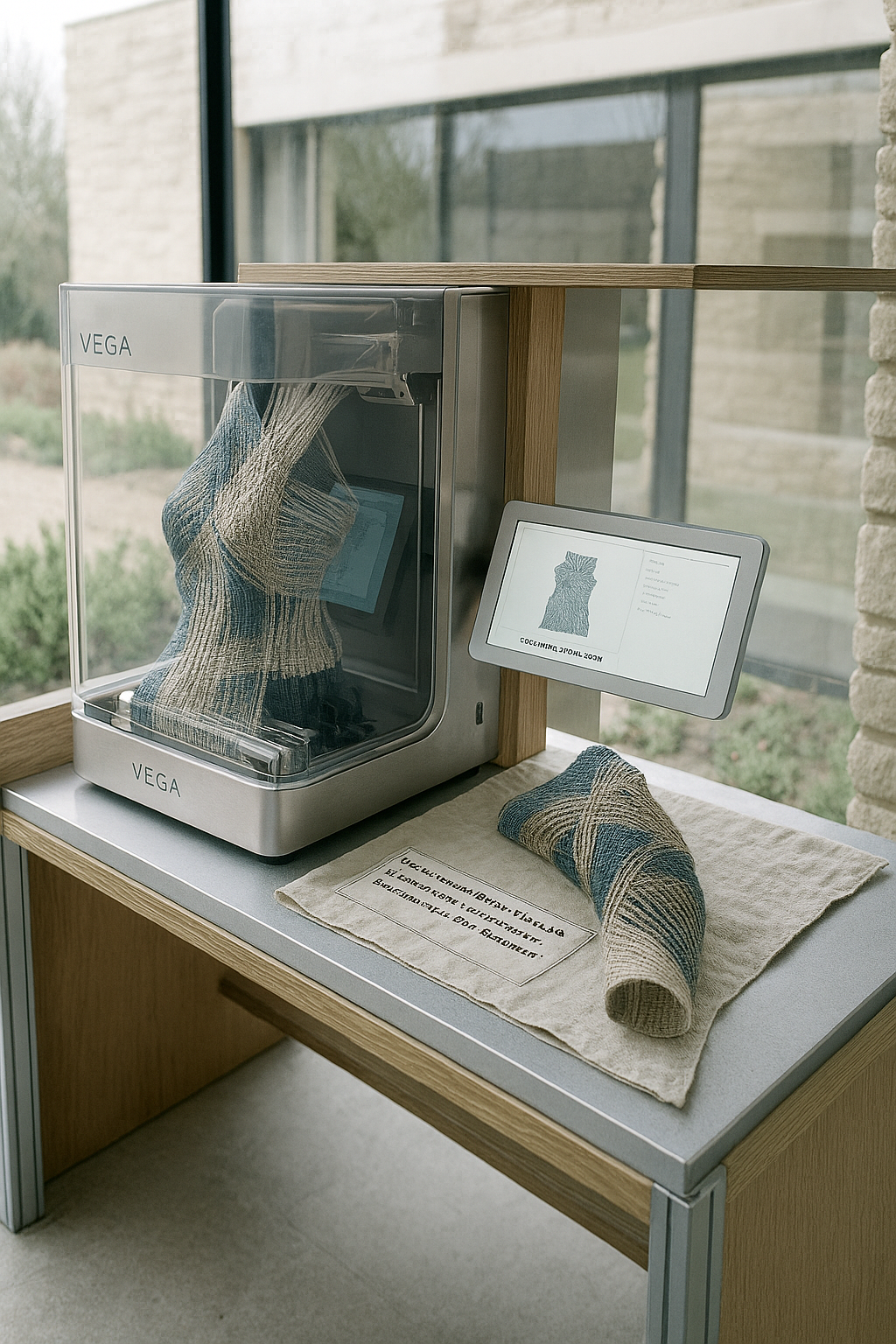
Vega 3D Weaving Technology, developed by unspun, is a groundbreaking computerized weaving system that creates custom-fit, 3D woven garments directly from digital designs. By bypassing the traditional 2D fabric cutting process, this technology eliminates the primary source of textile waste. It forms a critical part of a holistic solution for sustainable design and manufacturing, specifically targeting the industry's most persistent challenges: material waste, systemic overproduction, and the inefficiencies often associated with large-scale customization in the fashion supply chain.

Zero fabric waste, custom-fit garments, reduced production time, localized manufacturing, lower carbon footprint.

High initial investment, limited to certain garment types (e.g., jeans, tailored pieces), not yet scalable for mass-market apparel.

Adoption in traditional supply chains, consumer acceptance of new manufacturing methods, and technical integration with existing systems.
Technology / Solution Details
 Scope of improvement
Design and Manufacturing
Operation and Application Requirement
The technology utilizes AI, 3D modeling, and robotic weaving to produce made-to-measure garments, such as jeans and tailored clothing. The workflow begins with a 3D body scan or specific user input, which is processed via advanced design software to generate a precise digital pattern. The system then weaves the exact shape and size of the garment in a single process, using minimal fabric and requiring no cutting or sewing. Because the technology is highly automated and requires minimal manual labor, it is an ideal solution for on-demand and localized manufacturing, allowing brands to produce clothing closer to the consumer and eliminate international shipping waste.
Energy-Efficient and Innovative Manufacturing
The technology supports lean and zero-waste production by entirely eliminating fabric cutting and the financial burden of excess inventory. It utilizes precision manufacturing techniques that significantly reduce energy consumption compared to the traditional, resource-heavy cycle of mass-producing 2D fabric followed by labor-intensive cutting and sewing. Crucially, the system allows for mass customization without compromising sustainability goals, enabling a circular production model where manufacturing is driven by actual consumer demand rather than speculative overproduction.
Practical Applications and Case Sharing
The technology has already been piloted across North America, enabling brands and retailers to produce high-precision, custom-fit denim. In one notable case study, a collaboration with a U.S.-based denim brand demonstrated that 3D weaving can reduce fabric waste by over 90% and cut production time in half, all while maintaining exceptional quality and style consistency. These real-world applications illustrate how digital weaving can be seamlessly integrated into existing fashion supply chains to drastically enhance both sustainability and customer satisfaction.
Application Tips
Vega 3D Weaving is a groundbreaking solution in sustainable fashion, showing how digital weaving and customization can radically reduce material waste and overproduction. It represents a paradigm shift in garment manufacturing, where sustainability and personalization coexist without the need for conventional, resource-heavy methods.

 Back to Case Study List
  Download Case Study