Overview
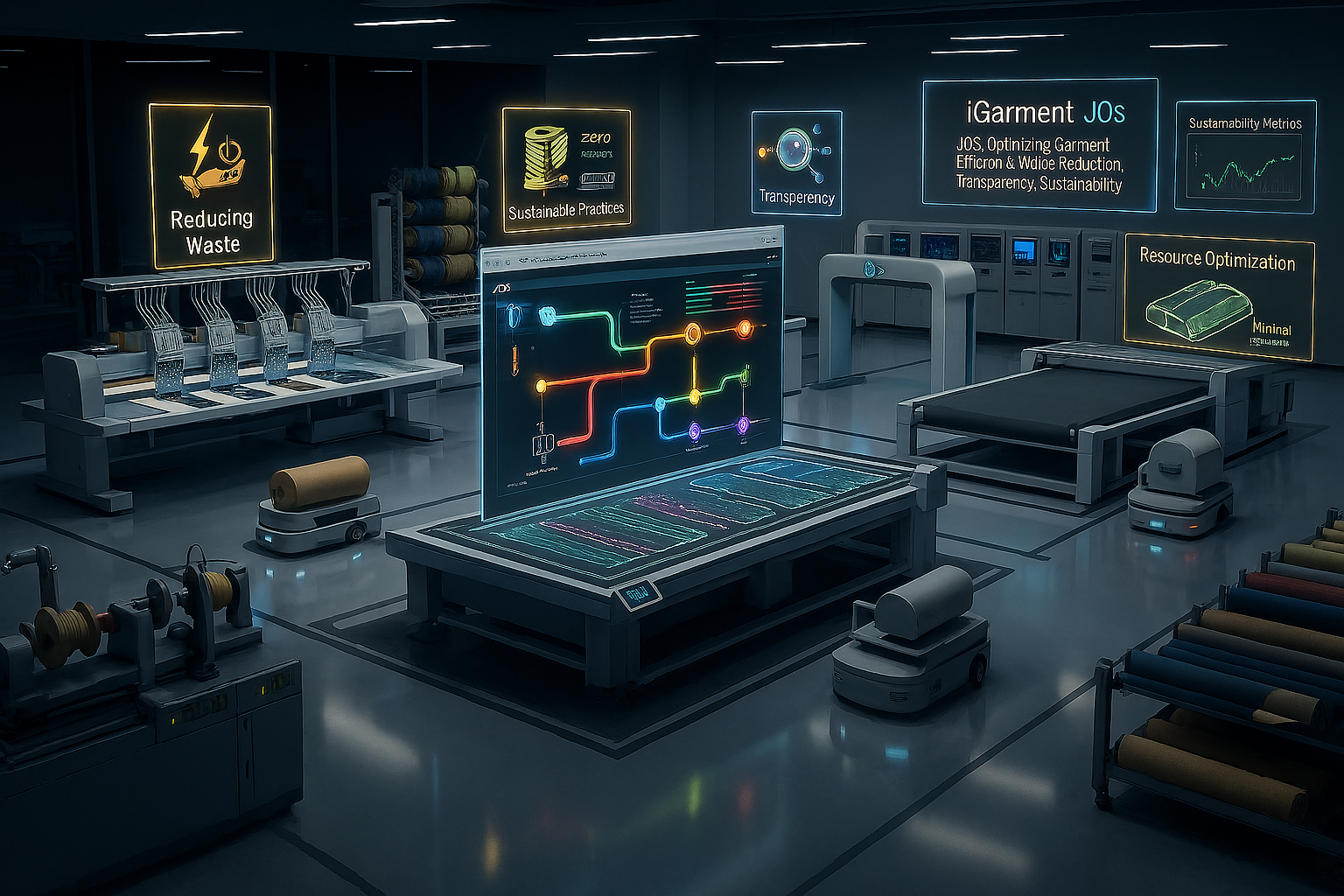
The Job Order System (JOS) is a comprehensive digital production planning and manufacturing management software developed by the Korean technology firm iGarment. JOS is specifically engineered to optimize the garment manufacturing lifecycle by boosting operational efficiency, slashing material waste, and enhancing end-to-end transparency across the production chain. As a cutting-edge design and manufacturing solution, it empowers fashion and textile enterprises to implement sustainable practices by preventing the overuse of resources and fundamentally improving long-term operational sustainability through data-driven management.


Improved efficiency, reduced material and energy waste, enhanced production transparency, lower carbon footprint.

Initial implementation cost; requires digital literacy and system integration.

Change management in traditional factories, data security concerns, and scaling across multi-country operations.
Technology / Solution Details
 Scope of improvement
Design and Manufacturing
Operation and Application Requirement
JOS seamlessly integrates with existing Enterprise Resource Planning (ERP) and Material Requirements Planning (MRP) systems, enabling real-time data tracking of all manufacturing operations. The software utilizes AI-driven job scheduling, digital instructions, and mobile barcode scanning to streamline complex workflows, eliminate manual errors, and monitor production progress in real-time. Built on a cloud-based and scalable architecture, the system is highly accessible for textile manufacturers and offers customizable modules tailored specifically for critical stages like cutting, sewing, and quality control.
Energy-Efficient and Innovative Manufacturing
By automating production scheduling and significantly minimizing idle time and rework, JOS facilitates a more energy-efficient manufacturing environment. It serves as a digital backbone for lean production and just-in-time (JIT) manufacturing strategies, effectively reducing material waste and preventing the accumulation of excess inventory. Ultimately, the system promotes circular and sustainable manufacturing by enabling the high-precision allocation of resources, ensuring that nothing is used unless it is needed.
Practical Applications and Case Sharing
JOS has been successfully implemented by numerous Korean and global textile and apparel manufacturers, helping them significantly reduce production time, cut fabric waste, and improve labour productivity. These case studies serve as powerful evidence of how digital transformation can drive an environmentally responsible manufacturing model. For instance, one factory reported a 20% reduction in production lead time and a 15% decrease in fabric waste shortly after adopting JOS, illustrating the tangible economic and environmental gains of a digitized supply chain.
Application Tips
JOS is a valuable solution in sustainable design and manufacturing, showing how digital tools can support green production by reducing overproduction and resource waste. It exemplifies the role of technology in enabling sustainable fashion enterprises to achieve environmental and operational goals simultaneously.
 Back to Case Study List
  Download Case Study