Overview
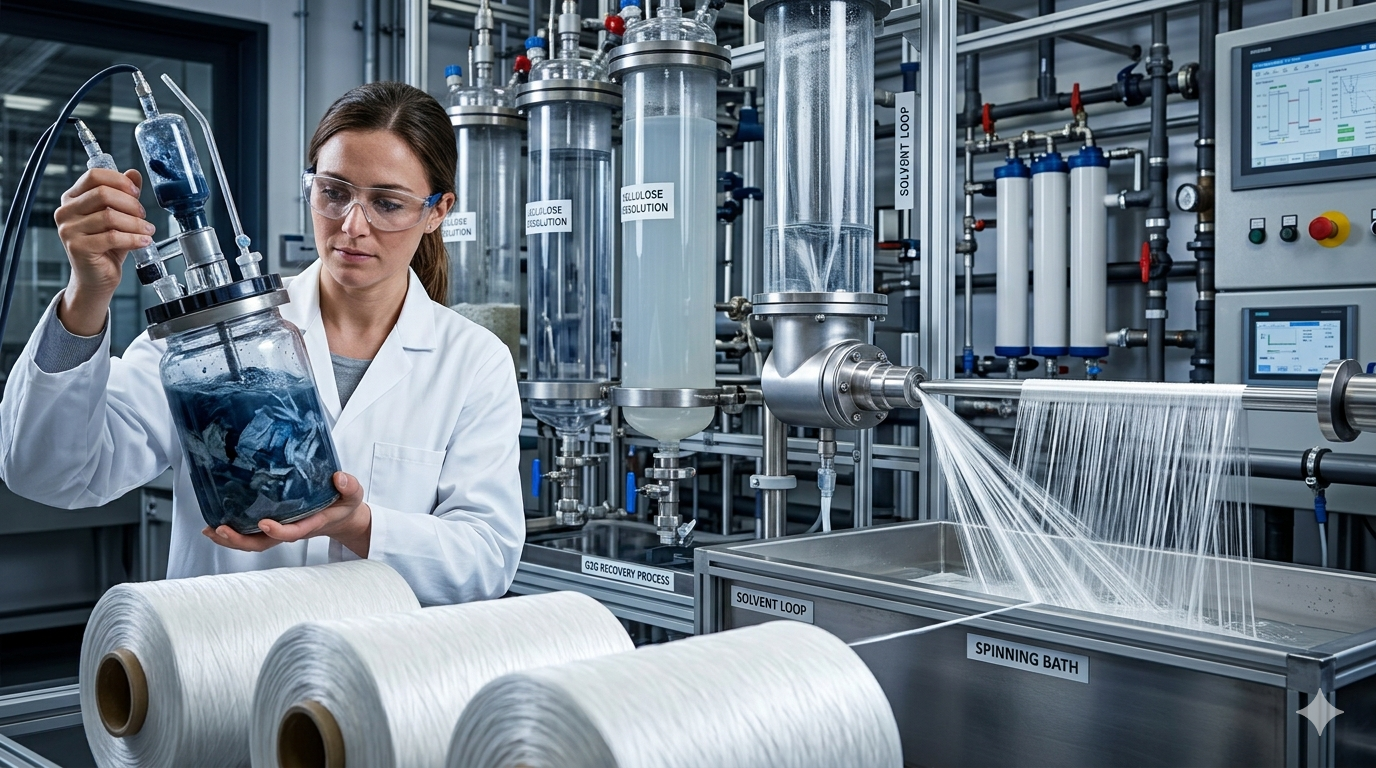
The Garment-to-Garment (G2G) Recycle System, developed by HKRITA (Hong Kong Research Institute of Textiles and Apparel), is a chemical recycling technology that transforms used cotton garments into new cotton fibres with properties like virgin cotton. Unlike traditional mechanical recycling, which weakens fibres and limits reuse, G2G uses a closed-loop chemical process to break down post-consumer garments into a pure cellulose solution, which is then reconstituted into high-quality fibres. This system supports circular fashion by enabling the remanufacturing of garments into new ones, significantly reducing the need for virgin cotton and minimizing textile waste.
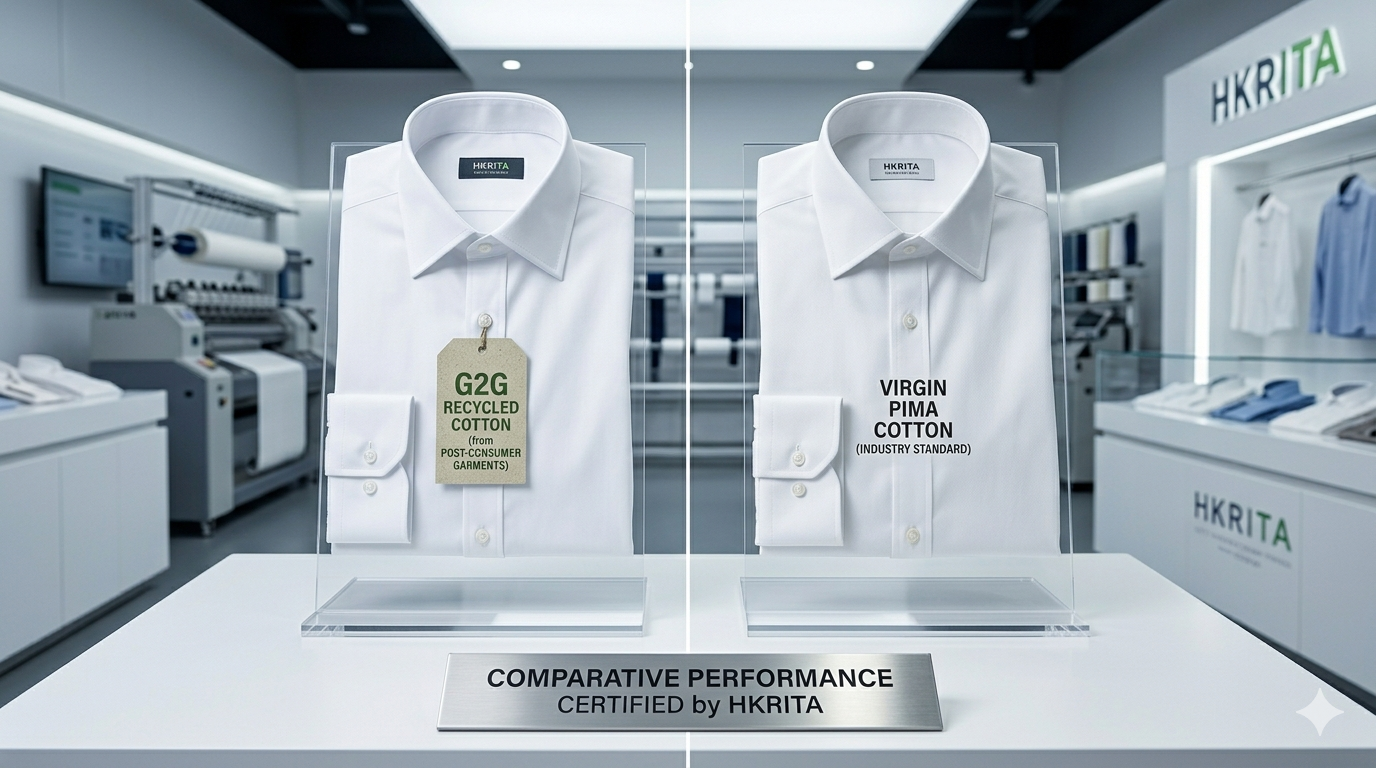

High-quality output comparable to virgin cotton; Reduces textile waste and supports a circular economy; Potential for integration into existing textile supply chains

Currently limited to cotton-based garments; Requires advanced chemical processing not yet widely adopted

Developing cost-effective scaling of the chemical process; Ensuring efficient collection and sorting of post-consumer waste; Consumer and brand education on the benefits of chemical recycling
Technology / Solution Details
 Scope of improvement
Handling Surplus Products
Operation and Application Requirement
The G2G process is conducted in a centralized recycling facility, where garments are collected, sorted, and treated with a non-toxic solvent to dissolve the cotton fibres. The resulting solution is regenerated into new fibres, which can be spun into yarns and woven into fabrics suitable for apparel production. The technology is compatible with existing textile manufacturing infrastructure, making it scalable for large-scale implementation. It is currently in the pilot and development phase, with a focus on cotton-rich garments and potential for future expansion to other cellulosic materials.
Handling Surplus and Waste Products
The G2G system supports circular design by closing the loop at the end-of-use stage of the garment lifecycle. It allows for design flexibility, as the regenerated cotton can be used to create new fashion items while maintaining aesthetic and functional quality. This innovation helps reduce the environmental impact of cotton production, including water use, land use, and carbon emissions.
Practical Applications and Case Sharing
HKRITA has conducted pilot trials with industry partners to test the commercial viability of the G2G system. These trials have demonstrated that the regenerated cotton fibres can be used in new clothing lines, maintaining softness, durability, and colorfastness. The initiative is part of a broader movement to transition fashion from linear to circular models and serves as a technical benchmark for other recycling innovations.
Application Tips
The G2G Recycle System is a promising technological advancement in the circular textile economy, particularly for surplus product handling and responsible raw material sourcing. It showcases the potential of chemical recycling to revolutionize how the fashion industry manages used garments, offering a sustainable alternative to traditional disposal methods.
 Back to Case Study List
  Download Case Study