Background
Hanin Enterprises, a Hong Kong-based company specialising in corporate uniforms and workwear, is a leader in implementing end-to-end circular clothing solutions to promote sustainability in textile manufacturing and usage. Hanin’s innovative model is being assessed for its potential to reduce waste, enhance resource efficiency and support sustainable business practices for SMEs. The company has developed a closed-loop system that integrates design, production, use, and recycling of garments, aiming to eliminate textile waste and extend product lifecycles. The case study demonstrates how circular solutions can be scaled for real-world application, offering actionable insights for SMEs in the Hong Kong and global fashion supply chain.

2020

Textile Manufacturing

Large
Technology / Solution Overview
 Scope of improvement
 Handling Surplus Products
 Implementation date
 2020 to Present
Description
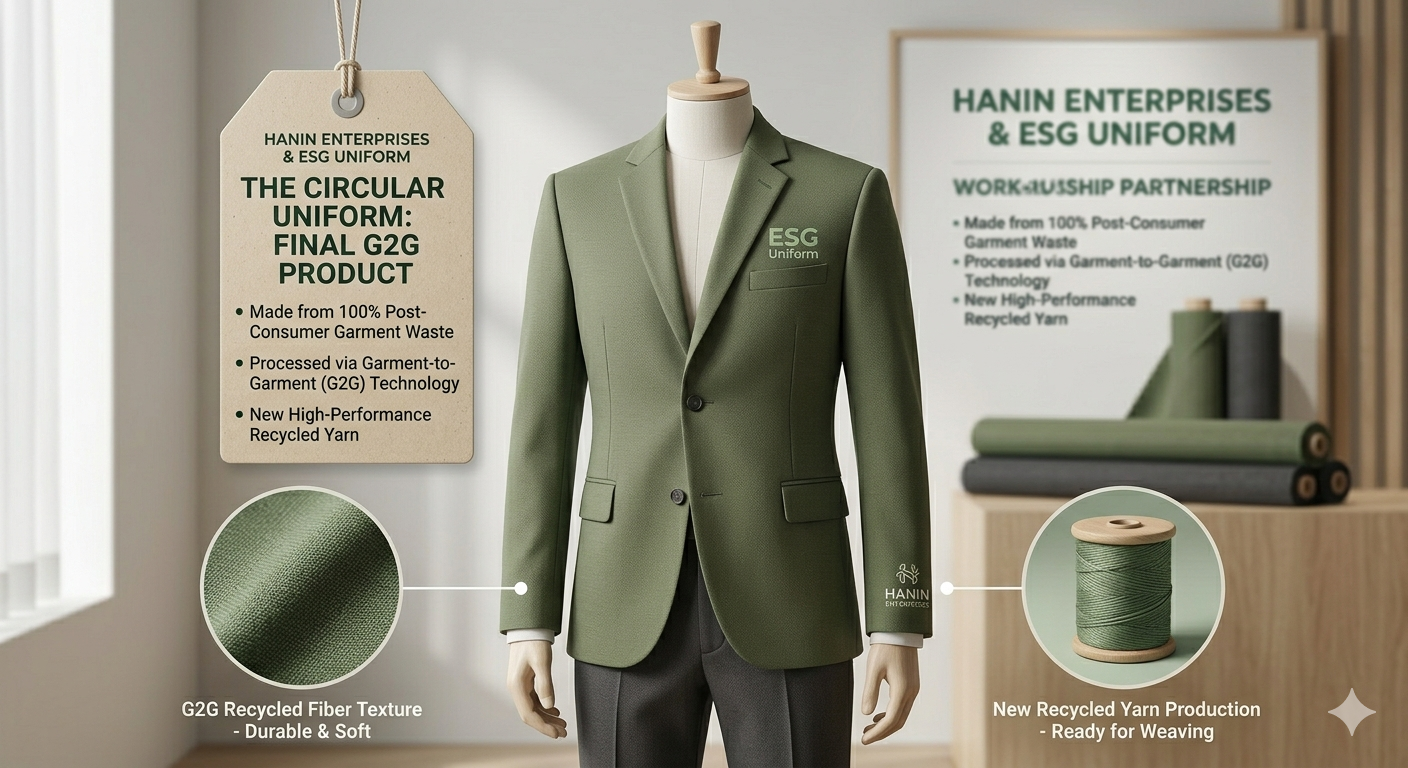
Hanin Enterprises’ end-to-end circular clothing solution is a comprehensive system designed to close the loop of textile usage. It involves collecting used uniforms, cleaning and repairing them, and recycling end-of-life garments using Garment to Garment (G2G) technology. This system significantly reduces textile waste and reliance on virgin materials, supporting circular economy principles. Hanin also uses recycled materials in new garment production, ensuring sustainability from design to disposal. The collaboration with ESG Uniform, a Hong Kong-based circular fashion platform, enhances the collection, redistribution, and recycling of workwear. The G2G recycling process breaks down post-consumer garments into fibers, which are then re-spun and re-woven into new fabrics, preserving the value of materials. This solution is relevant to the handling of surplus products and material selection pillars of the HKPC sustainability project, offering a scalable and replicable model for fashion SMEs seeking to reduce environmental impact and improve resource management.
Special Technical Assessment
Operation and Application Requirements
To implement the end-to-end circular clothing solution, Hanin Enterprises must establish collection and sorting systems, repair and reprocessing facilities, and integration with G2G recycling technology. The process requires logistical coordination for garment collection, transportation, and customer engagement to encourage uniform return and reuse. The company works closely with ESG Uniform to manage reverse logistics and redistribution, ensuring used garments are properly handled and reused or recycled. Staff must be trained in circular practices, including repair techniques, recycling protocols, and quality control for second-life products. The use of G2G technology demands access to recycling machines, technical expertise, and collaboration with recycling partners. Additionally, the system must be integrated with design and production workflows to incorporate recycled materials into new garments. While the initial investment in infrastructure and logistics can be high, the long-term sustainability and cost benefits make it viable for fashion SMEs aiming to adopt circular production models.Practical Applications and Case Sharing
Hanin Enterprises has successfully applied its end-to-end circular clothing solution in the corporate uniform market, where high volumes of used garments can be efficiently reused or recycled. In one case, the company partnered with ESG Uniform to launch a uniform recycling initiative, collecting discarded workwear from customers and converting them into new garments using G2G technology. This not only reduced textile waste but also lowered production costs by reusing high-quality fibers. Hanin demonstrated how the collection and sorting process is streamlined through customer education and digital tracking, ensuring transparency and accountability. The company also showcased how recycled uniforms are repaired, cleaned, and resold, extending their lifecycle and reducing demand for new materials. This real-world application proves that circular systems can be implemented at scale, especially in industrial and corporate fashion segments, and provides valuable lessons for SMEs looking to adopt sustainable and resource-efficient models.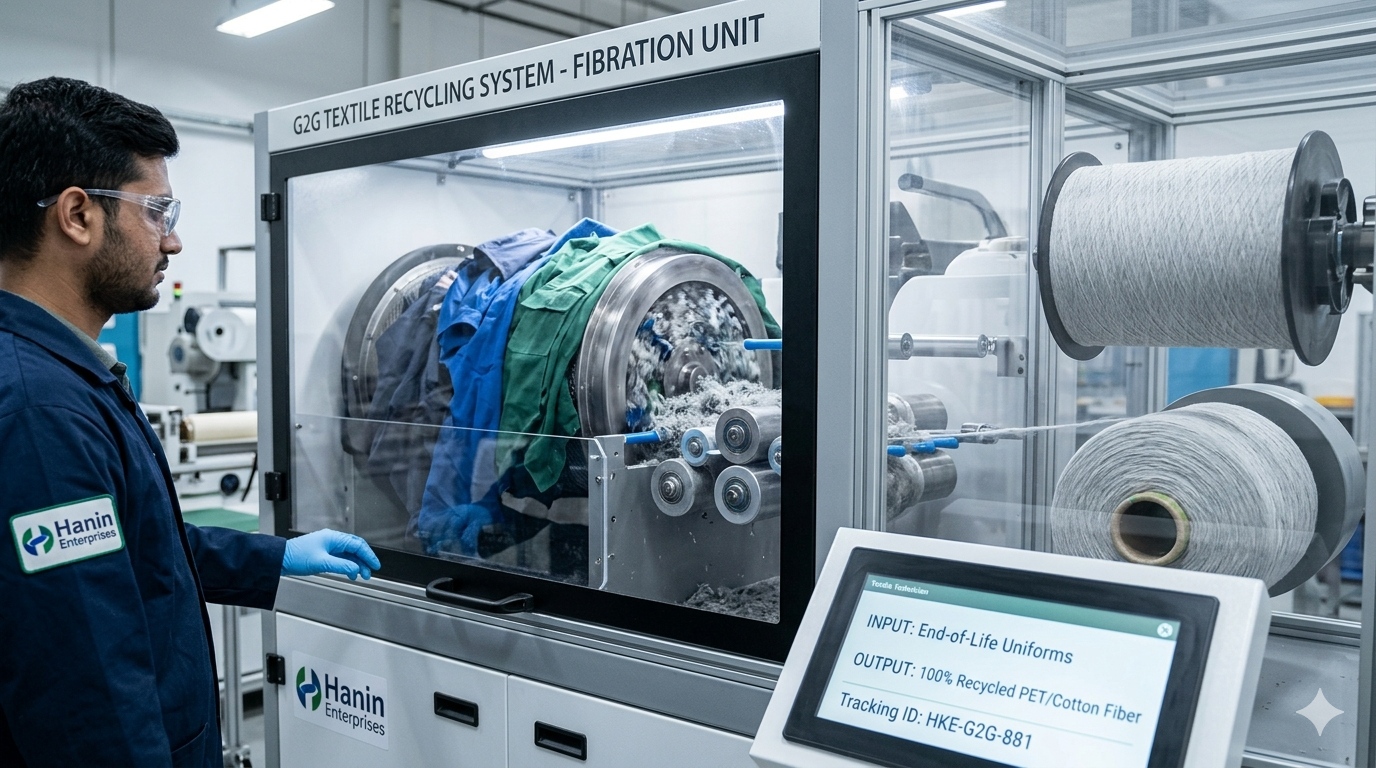
Key Performance Indicators
Environmental Benefits
Reduces textile waste, water use, and carbon emissions (50,000 kg carbon dioxide in the past five years) by recycling garments and reusing materials, promoting a closed-loop, low-impact fashion model.
Economic Benefits
Lower material and production costs by 20%, extends product lifecycle value, reduce inventory by 30% and supports cost-effective uniform management for businesses.
Social Benefits
Foster responsible consumption and industry collaboration, enhancing social responsibility and brand reputation
 Back to Case Study List
  Download Case Study