Background
OKOSix is a Hong Kong-based enterprise that has adopted OKOmer, a sustainable yarn technology, to support its mission of producing low-impact and circular fashion. The technology can be implemented in the fashion value chain, particularly in the selection of greener raw materials. OKOmer is a biodegradable and compostable fiber that breaks down into its original raw material after use, making it an innovative solution to reduce textile waste. The technology demonstrates its practical application and how it aligns with key sustainability goals such as reducing reliance on synthetic fibers and improving end-of-life management of garments.

2021

Raw Material and Byproduct Manufacturing

Small
Technology / Solution Overview
 Scope of improvement
 Selection of Raw Materials
 Implementation date
 2021 to Present
Description
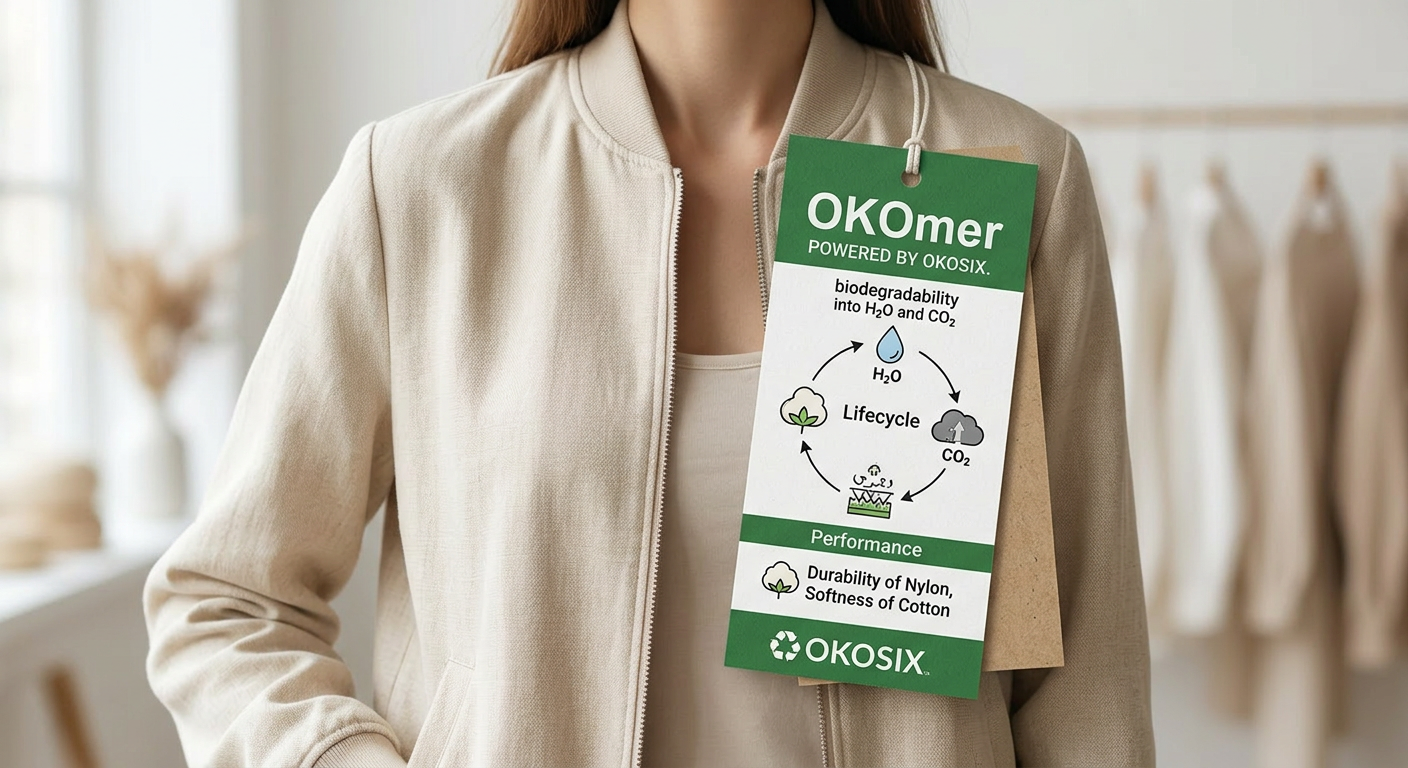
OKOmer is a 100% biodegradable and compostable fiber derived from organic and natural sources, designed to replace conventional polyester and nylon in textile production. The fiber is engineered to degrade in natural environments, returning to the ecosystem as water, CO₂ and biomass. OKOSix utilises OKOmer to create high-performance, sustainable fabrics suitable for a range of fashion and functional applications. The fiber maintains the durability and flexibility of synthetic materials while significantly reducing environmental impact. It is also produced using low-carbon processes and does not require chemical treatments for biodegradability. OKOmer is compatible with existing textile machinery and can be blended with other natural or recycled fibers to enhance performance. Its adoption supports the circular economy by enabling closed-loop production and reducing landfill and ocean pollution. For fashion SMEs, OKOmer presents a viable and innovative option for developing eco-friendly products that align with global sustainability standards and consumer demand.
Special Technical Assessment
Operation and Application Requirements
Implementing OKOmer in textile production requires access to standard yarn spinning and weaving/knitting equipment, as the fiber is compatible with conventional textile machinery. OKOSix sources OKOmer yarn from OKO Group, which supplies the fiber in a ready-to-process format. Production teams need basic training to handle the fiber, especially in blending it with other natural fibers to optimise strength and texture. The fiber is suitable for a wide range of fabric types, including knits, wovens, and non-wovens, making it versatile for different garment applications. However, to maintain quality and consistency, careful control of moisture and temperature is required during processing. Additionally, end-of-life management is a critical factor—consumers must be educated on proper composting conditions to ensure the fiber degrades effectively. The supply chain for OKOmer is currently limited to a few partners, requiring strategic sourcing and planning by SMEs considering its adoption.Practical Applications and Case Sharing
OKOSix has applied OKOmer in the production of disposable products, including surgical masks, gowns, cosmetic facial masks, diapers, hard casings for single-use medical test kits, and more. OKOmer yarns were blended with organic cotton to create lightweight, breathable, and durable fabrics ideal for sportswear. The process required no major modifications to existing machinery, making it feasible for SMEs with limited production overhauls. The final products were praised for their comfort and eco-friendly credentials, with customers noting the softness and flexibility of the fabric. This case illustrates how OKOmer can be successfully integrated into fashion design and manufacturing without compromising aesthetics or performance. The collaboration also highlights the importance of working with established sustainable material innovators. The technology demonstrates the practicality of using biodegradable fibers for SMEs aiming to reduce plastic reliance and offer circular fashion solutions.
Key Performance Indicators
Environmental Benefits
OKOmer is fully biodegradable and compostable, reducing plastic pollution and supporting a circular textile economy.
Economic Benefits
The fiber allows brands to differentiate themselves in the market and potentially command premium pricing for sustainable products.
Social Benefits
Raises awareness of biodegradable materials and encourages more sustainable consumer behavior.
 Back to Case Study List
  Download Case Study